
Photo: DerYang2004 / Wikimedia Commons, CC BY-SA 4.0
From November, the islands of Malaysia’s east coast close for the monsoon. Here is what shuts, when it reopens, and where to find sun and calm water until March.
If you are planning a beach holiday in Malaysia between November and February, one fact matters more than any other. The country has two coasts with opposite seasons. On the east coast, facing the South China Sea, the north-east monsoon brings heavy rain, strong winds and rough seas. Boats stop running and most island resorts close. On the west coast, sheltered by the mountains of the peninsula, this is the best time of year. Here is how to plan around it for 2026–27.
What Closes, and When
The Malaysian Meteorological Department (MET Malaysia) said on 13 October 2026 that the north-east monsoon is expected to begin at the end of October and last until mid-March 2027. It warned of two or three episodes of extreme rain on the east coast states early in the season. These are the islands most affected:
- Perhentian Islands (Terengganu): boats leave from the jetty at Kuala Besut. Last season, the Besut District Council stopped passenger boarding there from 1 November 2025 to 28 February 2026, noting that the monsoon runs each year from early November to early March. Expect a similar closure this winter.
- Redang (Terengganu): Tourism Malaysia says resorts close from November to February. Our Pulau Redang guide covers the season.
- Tioman (Pahang): the main speedboat operator from Tanjung Gemok lists a closure from 1 November 2026 to 28 February 2027, reopening on 1 March 2027.
- Kapas, Lang Tengah and Tenggol (Terengganu): these smaller islands follow the same pattern; check directly with your resort.
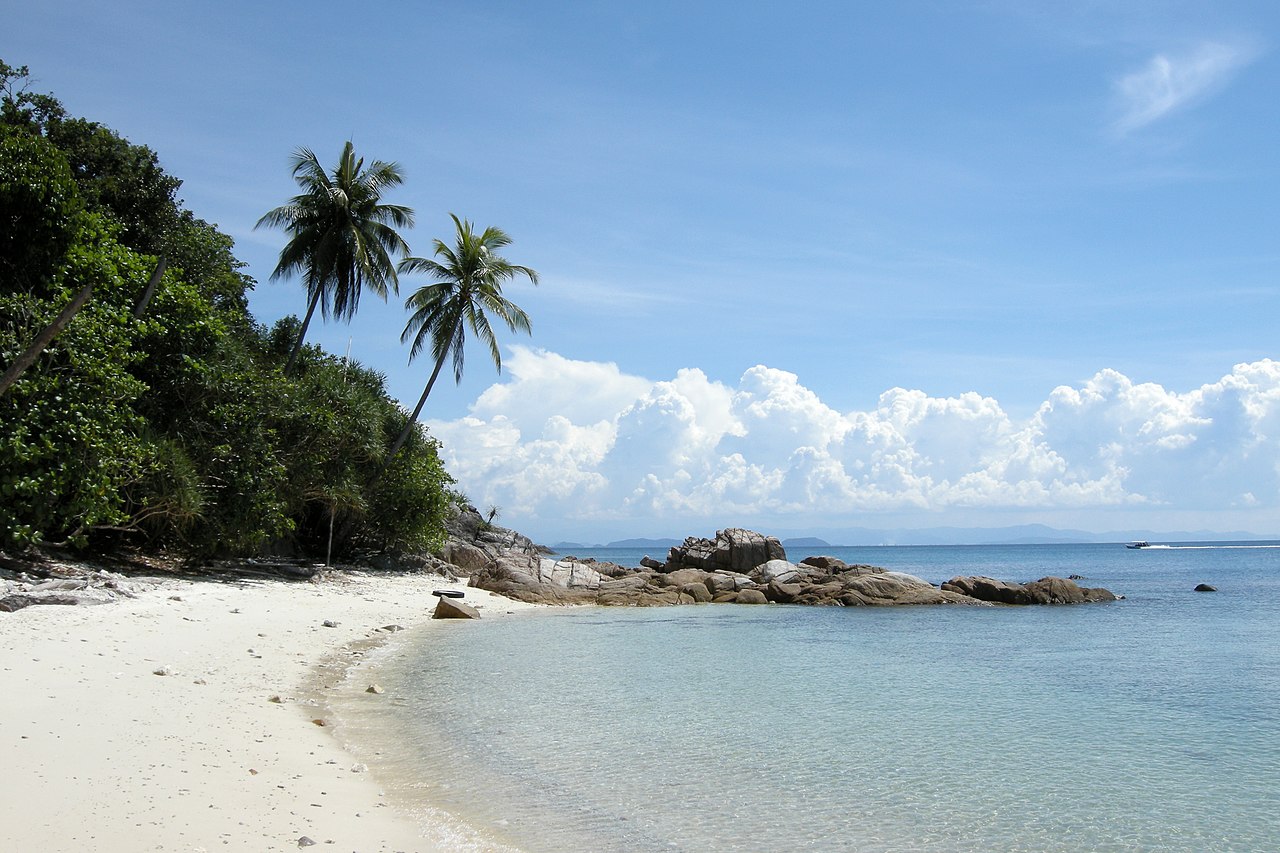
Photo: Vyacheslav Argenberg / Wikimedia Commons, CC BY 4.0
Closure dates are not a single national rule. They are set by jetty authorities, boat operators and resorts, and they shift a little with the weather each year. If you are travelling at the edges of the season, in late October or early March, confirm with your resort and boat operator before you book flights.

Photo: Chamberlain of Nilai / Wikimedia Commons, CC BY-SA 4.0

Photo: Yousha Bin Younus / Wikimedia Commons, CC BY 3.0
The East Coast in Monsoon Season
The mainland coast does not close. Towns such as Kuantan, Kemaman and Kuala Terengganu carry on as normal, and some travellers enjoy the drama of the season: grey skies, big waves and empty beaches. But this is not swimming weather. Red flags fly, rip currents are strong, and floods can cut roads. If you visit, follow MET Malaysia warnings through its website or the myCuaca app, and do not go into the sea.

Photo: Dominic Nelson / Wikimedia Commons, CC BY-SA 4.0
Where to Go Instead: Langkawi
Langkawi, an archipelago in the Andaman Sea off Kedah, is the obvious alternative. The official tourism site, Naturally Langkawi, describes high season as November to April, with clear skies and temperatures of 30°C to 35°C. The Visit Langkawi guide recommends January to March for calm seas, boat trips and snorkelling, though it notes this is also the hottest time of year.
Pantai Cenang is the liveliest beach, lined with restaurants and hotels; Pantai Tengah next door is quieter. Langkawi has direct flights from Kuala Lumpur and Penang on Malaysia Airlines and AirAsia, and ferries run from Kuala Kedah and Kuala Perlis on the mainland. The island is also a duty-free zone, which is popular for year-end shopping.

Photo: Nahid Sultan / Wikimedia Commons, CC BY-SA 4.0
Penang: Beaches Plus a Heritage City
Penang combines a beach with one of Asia’s great food cities. Batu Ferringhi, on the island’s north coast, has a long beach lined with resort hotels and is an easy drive from George Town. For wilder sand, Penang National Park at Teluk Bahang has walking trails to secluded bays. The sea at Batu Ferringhi is not as clear as on the islands, so think of it as a place to relax rather than to snorkel.

Photo: philip.mallis / Wikimedia Commons, CC BY-SA 2.0
Pangkor: An Easy Island Escape
Halfway between Kuala Lumpur and Penang, Pangkor in Perak is a laid-back island of fishing villages and small beaches. Tourism Malaysia recommends Teluk Nipah on the west side, where at low tide you can wade across to the islet of Pulau Giam. Ferries run from Lumut, with a one-way fare of RM11.50 (about US$2.80) on the operator’s website, and from nearby Marina Island.

Photo: Michael / Wikimedia Commons, Public domain
Malaysia always has a beach in season. The trick is choosing the right coast.
Planning Tips
- Book early for the holidays. December school holidays, Christmas and New Year make west-coast hotels busy.
- Watch the weather. El Niño may make January to March 2027 hotter and drier than usual, MET Malaysia says, which raises the risk of local haze. Check air quality before outdoor plans.
- Come back in spring. The east coast islands usually reopen from March, and April to August is their best season.
If you are heading to the east coast for its culture rather than its islands, monsoon season is a good time to explore Kuala Terengganu’s museums; see our guide to the Terengganu State Museum.
Good to know
Monsoon timing is from MET Malaysia (13 October 2026). Closure dates are from the Besut District Council, Tourism Malaysia and the Tioman speedboat operator; Langkawi seasons from Naturally Langkawi and Visit Langkawi; Pangkor details from Tourism Malaysia and the Pangkor ferry operator; all checked in October 2026. Dates can change, so confirm with your resort and boat operator. USD at about RM4.08.
Where do you go for a beach in Malaysia over the year-end holidays? Share your tips in the comments below.
Explore the magazine
THE SERUMPUN TRAVEL DESK
Stay a little longer
Planning your Malaysian escape? Explore accommodation and compare current availability on Trip.com.
Affiliate disclosure: Serumpun Living may earn a commission from qualifying bookings made through this link, at no additional cost to you. Hotel prices and availability are determined by Trip.com.
Leave a Reply