
Photo: The Wandering Angel / Wikimedia Commons, CC BY 2.0
Musang King, Black Thorn, D24 and the humble kampung durian: when Malaysia’s most famous fruit is in season, how the varieties differ and how to eat it like a local.
Few foods divide visitors like the durian. Its spiky husk hides pods of soft, custard-like flesh with a smell that has been compared to everything from almonds to onions. Malaysians call it the King of Fruits and plan holidays around its season. If you are curious, Malaysia is one of the best places on earth to try it. Here is what you need to know.
When Is Durian Season?
Durians are not picked from the tree; they ripen and fall. Most of Peninsular Malaysia has one main season in the middle of the year. The Penang state government’s 2026 durian guide gives the Malaysian season as May to September, with Penang’s peak in June and July. The Federal Agricultural Marketing Authority (FAMA) said in June 2026 that the season was running in most states at once, from June to August. There can be a smaller second crop late in the year in some areas, but supply is unpredictable.
In 2026, a bumper harvest produced what Malaysians call a “durian tsunami”. The Star and CNA reported in June that Musang King had fallen to as low as RM9 (about US$2.20) a kilo at some stalls, from around RM90 earlier. Prices like that are rare. In a normal year, expect premium varieties to cost many times more.

Photo: Mavis67 / Wikimedia Commons, CC BY-SA 4.0
The Varieties to Know
Malaysia’s Department of Agriculture registers durian clones with a “D” number. Its list of registered varieties, updated in August 2025, includes the names you will see on stall signs:
- Musang King (D197, registered as Raja Kunyit): the country’s most famous variety and its biggest export. It has bright yellow, thick, bittersweet flesh. In Chinese it is often sold as 猫山王 (Mao Shan Wang).
- Black Thorn (D200, registered as Ochee and also called Duri Hitam): rich, sweet and creamy, and often priced at the very top. The name is usually explained by a dark tip at the base of the fruit.
- Red Prawn (D175, Udang Merah): orange-tinged, soft and sweet, a Penang favourite.
- D24: an older, classic variety with a gentle bitterness, long popular before Musang King took over.
- Tekka (D160, Buluh Bawah) and IOI (D168, Hjh Hasmah): two more names you may see on signs.
- Kampung durian: “village” durians from unnamed, seed-grown trees. They vary from tree to tree, cost far less and are loved by many locals.
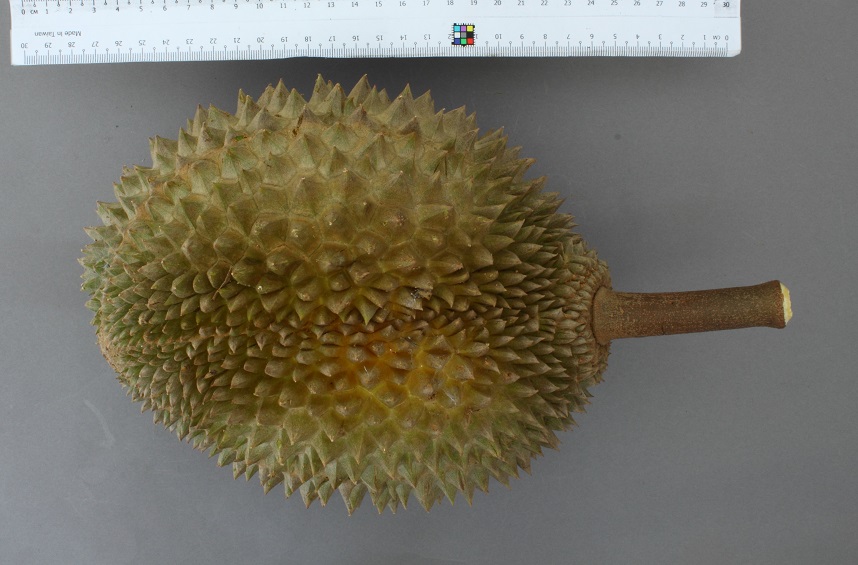
Photo: Royleeyy / Wikimedia Commons, CC BY-SA 4.0

Photo: Royleeyy / Wikimedia Commons, CC BY-SA 4.0
Where to Eat Durian
You can find durians almost anywhere in season, from roadside stalls to air-conditioned durian shops. These are the best-known areas:
- Penang: the hillside orchards of Balik Pulau and the stalls around Air Itam are famous for Red Prawn and other local varieties.
- Pahang: the hill towns of Raub and Bentong, about 1.5 to 2 hours from Kuala Lumpur, are the heartland of Musang King. Some orchards welcome visitors in season.
- Kuala Lumpur: durian stalls and shops trade in many neighbourhoods, and some run all-you-can-eat durian buffets in season.
- Sabah and Sarawak: Borneo has its own wild durian species, including red- and orange-fleshed fruit you will not find on the peninsula.

Photo: diego_cue / Wikimedia Commons, CC BY-SA 3.0

Photo: Suyash Dwivedi / Wikimedia Commons, CC BY-SA 4.0
How to Buy and Eat Durian
- Let the seller choose. Tell them how you like it, sweet or bitter, soft or firm, and ask them to open it. A good seller will tap and smell the fruit before cutting.
- Check the price per kilo. Most stalls price by weight. Ask before the fruit is opened, and confirm the variety on the sign.
- Eat it fresh. Durian is best eaten within hours of opening. Use the plastic gloves most stalls provide, or eat with your fingers and wash with water from the husk, as some locals do.
- Go easy on alcohol. Many Malaysians advise against drinking alcohol with durian, and the fruit is very rich. A little goes a long way.

Photo: Rruunnaa / Wikimedia Commons, CC BY 4.0
Durian Etiquette
That famous smell lingers. The Penang guide notes that durians are banned in most hotels, on public transport and on aircraft, and you will often see “no durian” signs in lifts and lobbies. Eat at the stall, or take the fruit to an outdoor area. If you want to take some home, look for vacuum-packed frozen durian or durian sweets, but check the import rules of your destination first.
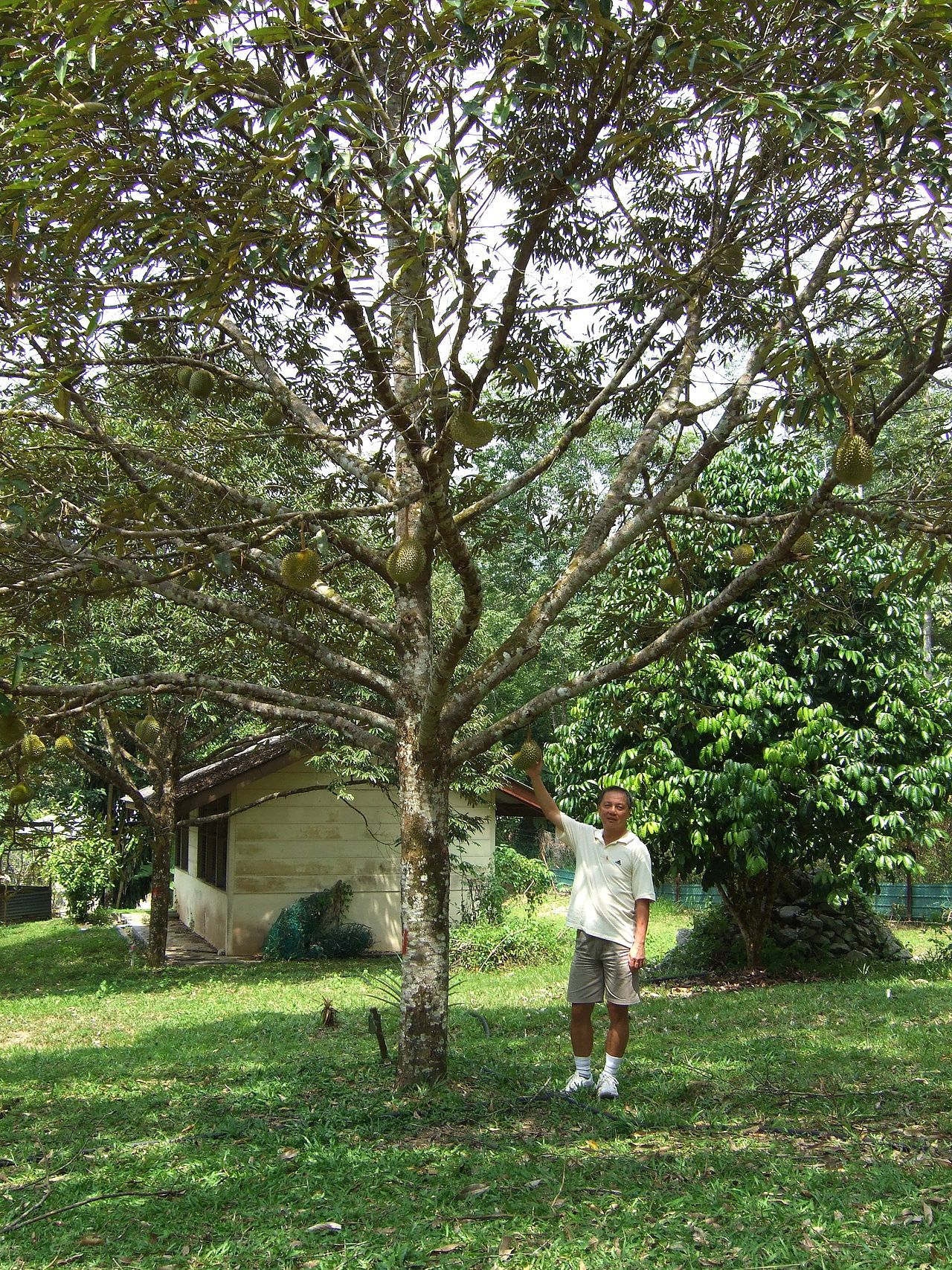
Photo: Yun Huang Yong / Wikimedia Commons, CC BY-SA 2.0
Durians are not picked; they fall. Being under the tree at the right moment is half the art.
As we write in October 2026, the main season is over, so plan for June to August 2027. Pair your durian trip with other local flavours in our story of nasi lemak and our guide to ordering kopi and teh.
Good to know
Varieties are from the Department of Agriculture’s registered list (August 2025). Season dates are from the Penang state government’s 2026 guide and FAMA (June 2026). 2026 prices are from The Star and CNA (June 2026) and will not apply every year. USD at about RM4.08.
Musang King, Black Thorn or kampung durian? Tell us your favourite in the comments below.
Explore the magazine
Leave a Reply