
Photo: Dominic Nelson / Wikimedia Commons, CC BY-SA 4.0
“Kopi-O kosong peng, satu!” To the uninitiated it sounds like a password. To anyone raised on Malaysian coffee shops, it is simply breakfast.
The kopitiam, a word that marries the Malay kopi (coffee) with the Hokkien tiam (shop), is where Malaysia’s languages meet over a marble-topped table. Its ordering code mixes Malay, Hokkien and Cantonese, and it is beautifully efficient once you know it. A drink order is built in layers: the drink, then the milk, then the sugar, then the strength, then the temperature. Learn the pieces and you can assemble almost anything.
Step One: Choose Your Drink
Kopi is coffee and teh is tea. In a traditional kopitiam, either will arrive dark, strong and, unless you say otherwise, sweetened with condensed milk. Other regulars include Milo, the chocolate malt drink every Malaysian child knows, and cham, a mix of coffee and tea.
Step Two: The Milk Code
- Kopi / Teh: with condensed milk, which also sweetens it.
- Kopi-O / Teh-O: black, with sugar. The “O” comes from the Hokkien word for black.
- Kopi-C / Teh-C: with evaporated milk and sugar. Sarawak Tourism notes that the “C” is said to stand for Carnation, the evaporated milk brand.
Step Three: Sugar and Strength
- Kosong: Malay for zero. Kopi-O kosong is black coffee with no sugar at all, the answer to this guide’s most searched question.
- Siew dai: Cantonese for less sweet. Ga dai means sweeter.
- Kau (or gao): thick and strong. Po (or poh): thin, lighter.

Photo: Cheng from Austin, US / Wikimedia Commons, CC BY-SA 2.0
Step Four: Hot, Warm or Iced
Drinks come hot by default. Add peng, Hokkien for ice, for the iced version, so teh-C peng is iced tea with evaporated milk. In Penang you may hear sorm for warm and juak for hot.
Put it together and the code is easy to read. Kopi-C siew dai peng is iced coffee with evaporated milk and less sugar. Teh-O kosong is plain black tea with nothing added. Kopi kau is the strong, sweet, milky cup that fuels a great many Malaysian mornings.
Good to know
- Penang Hokkien: some shops use kiam liau for less sugar and mai liau for none, alongside kosong.
- Sarawak: try teh C peng special, the three-layer iced tea of palm sugar, evaporated milk and tea, said to have begun at a food court at 7th Mile Bazaar in Kuching. Stir before you drink.
- Mamak shops: the same words largely apply, but the house speciality is teh tarik.
Off-Menu Favourites
Once you have the basics, the kopitiam gets playful. In Penang, cham peng is iced coffee and tea together with condensed milk, while Neslo marries Nescafé with Milo. Order a “Michael Jackson” at many shops and you will receive soya milk with grass jelly, black and white in one glass; ask for the parts separately as tau cui and leong fan. Regulars also add a squeeze of lime to their tea, and on hot afternoons herbal and barley drinks take over from coffee entirely. None of these is written on a board, which is half the pleasure. Ask what the shop is known for, and order that.
Teh Tarik: A Drink With a Heritage Listing
Teh tarik, literally “pulled tea”, is strong tea with condensed milk poured back and forth between two vessels from a height until it develops a thick head of froth. It is theatre and technique at once: the long pour cools the tea, blends it and aerates it. The Department of National Heritage placed teh tarik on its list of National Heritage foods and drinks in 2009, alongside nasi lemak and roti canai.
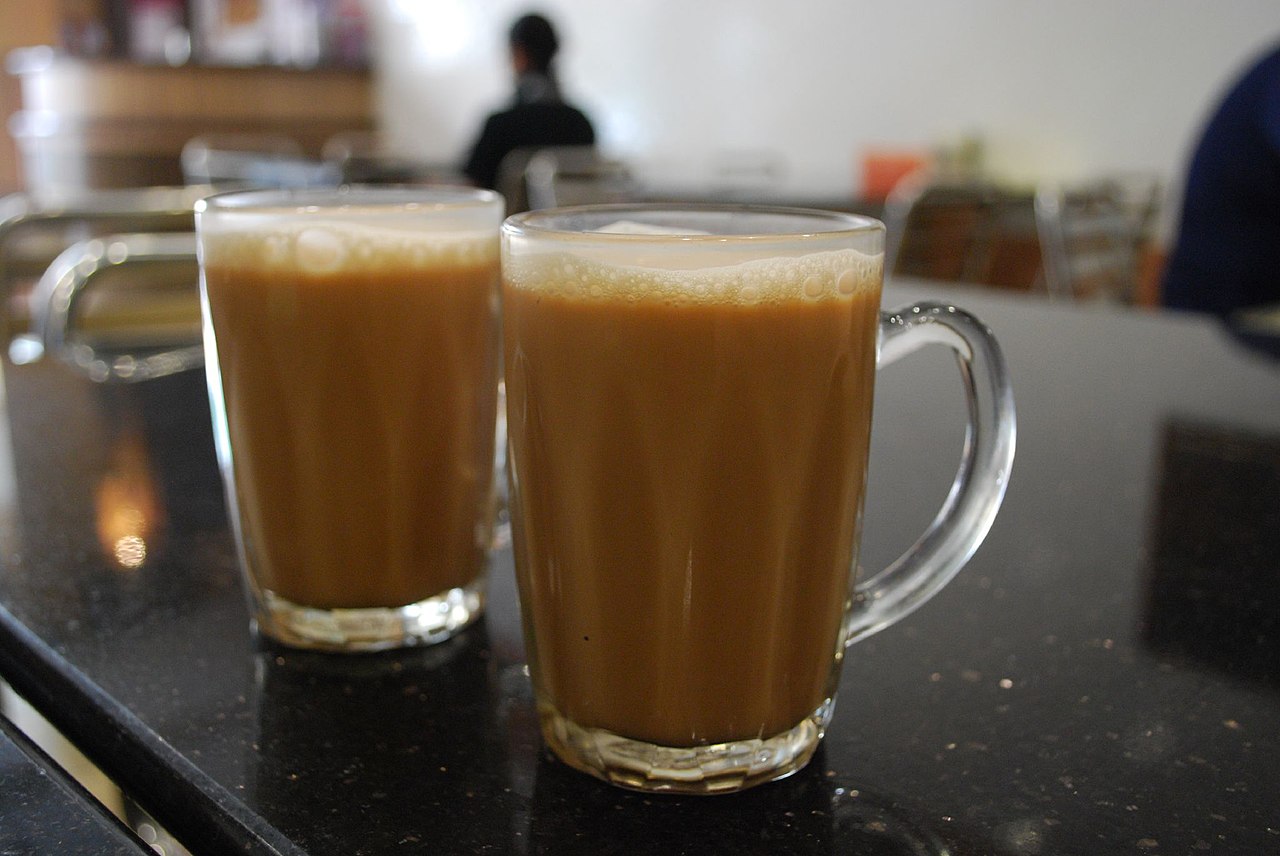
Photo: Alpha from Melbourne, Australia / Wikimedia Commons, CC BY-SA 2.0
Kopitiam Etiquette
- Find a seat first. At busy shops, sharing a table with strangers is normal and polite.
- Order drinks and food separately. Many kopitiam have a drinks counter run by the shop and food stalls run by individual hawkers, each taking their own orders.
- Pay as asked. Some stalls take payment when the food arrives; others ask at the counter. Watch what the regulars do, and keep small notes or an e-wallet ready.
- Taking away? Ask for it bungkus in Malay or tapau in Cantonese, and your drink may arrive in a tied plastic bag with a straw.
- Return the favour. When the morning rush builds, finish up and free the table.

Photo: ReySussy / Wikimedia Commons, CC BY-SA 4.0
Editor’s Note
The codes in this guide are widely used, but they are not universal. A cup called “kopi” in a Chinese kopitiam, a mamak shop and a modern café may be three very different drinks, and some terms vary from town to town. If in doubt, describe what you want in plain words. Every coffee shop in Malaysia has heard every version of the order before.
Many of the country’s most loved kopitiam trace their roots to Hainanese migrants, and the East Coast has its own proud examples; our Kemaman food trail visits one of Chukai’s oldest. Order with confidence, sit a while, and let the morning happen around you.
What is your usual order? Share your kopitiam code in the comments below.
Explore the magazine
Leave a Reply