
Photo: Azreey / Wikimedia Commons, CC BY-SA 4.0
Powder-white sand, clear water and a turtle sanctuary: how to plan a trip to Terengganu’s best-known marine park island, and how to visit gently.
Some 45 kilometres off the coast of Terengganu, Pulau Redang (Redang Island) is the largest island in an archipelago that has been protected as a marine park since the 1980s. The water is so clear that you can watch fish from the jetty. The beaches are white sand. Green turtles nest here between spring and autumn. If you only make one island trip on Malaysia’s east coast, this is a strong candidate. Here is when to go, how to get there, and what the marine park rules mean for you.
Why Redang Is Special
According to Tourism Malaysia, Redang is the largest of nine islands in its group, and the waters around it were gazetted as a marine park in 1985. Marine Parks of Malaysia, the government-backed visitor site, describes the Redang archipelago as the first marine protected area in Peninsular Malaysia. The marine park centre is on the neighbouring islet of Pulau Pinang (not to be confused with Penang on the west coast).
Protection matters because the coral reefs here are both rich and fragile. Inside the marine park there is no fishing, no collecting of coral or shells, and no motorised water sports such as jet skis. Snorkellers and divers share the reefs with shoals of reef fish and, with luck, turtles.

Photo: Casarher / Wikimedia Commons, CC BY-SA 4.0
When to Go
Redang has a short, clear season. The north-east monsoon brings rough seas to the east coast from around November to February, and the island’s resorts close for those months. Marine Parks of Malaysia names April to August as the best time to visit, with calmer water and better visibility. Weekends and school holidays in Malaysia fill quickly, so book ahead.
As we write in October 2026, the season is ending. The island will reopen for the 2027 season in spring. Check your resort’s exact dates, which vary from year to year.

Photo: yeowatzup / Wikimedia Commons, CC BY 2.0
Getting There
Most visitors fly into Kuala Terengganu (Sultan Mahmud Airport, TGG), which has direct flights from Kuala Lumpur. From there you have two options:
- Via Merang: the main gateway is the jetty at Merang, about 35 km north of the airport. Marine Parks of Malaysia gives the taxi ride as about an hour and around RM60 (about US$15). The boat crossing is about 25 km and takes 30 to 45 minutes, at around RM55 (about US$13.50) each way. If you drive, parking at Merang costs about RM10 (US$2.50) a day.
- From Kuala Terengganu: some resorts run boats from the city, a trip of around two hours. Marine Parks of Malaysia reports that the Shahbandar jetty in the city is closed, with a temporary jetty in use at Duyong Marina.
Most resorts sell packages that include transfers, meals and snorkelling trips, which is often the simplest way to visit. If you are travelling from Kemaman further south, allow for a drive of several hours up the coast; our Getting to Kemaman guide covers the region’s roads and airports.

Photo: Slleong / Wikimedia Commons, CC0
Marine Park Fees and Rules
Every visitor pays a marine park conservation fee. Published rates are RM30 (about US$7.35) for international adults and RM15 for children, with lower rates for Malaysians, and a jetty tax of around RM5 at Merang. Resort packages often include the fee, so check your booking.
- Do not stand on or touch coral; float with fins or a life jacket instead.
- Use reef-safe sunscreen, or cover up with a rash guard.
- Do not feed fish or take shells, coral or sand.
- Take your rubbish back to the mainland.
Where to buy
A short-sleeve rash guard keeps the sun off your back on long floats over the reef, with no sunscreen in the water.

Photo: HL Wen / Wikimedia Commons, CC BY-SA 4.0
Snorkelling, Diving and Beaches
Snorkelling is the main event. Resort boat trips usually stop at the marine park centre on Pulau Pinang, where the shallows are full of fish, and at nearby reefs. Redang is also a popular place to learn to dive, with several dive centres offering courses. Back on land, Pasir Panjang (“long beach”) on the east coast has most of the resorts, while smaller bays elsewhere on the island are quieter.
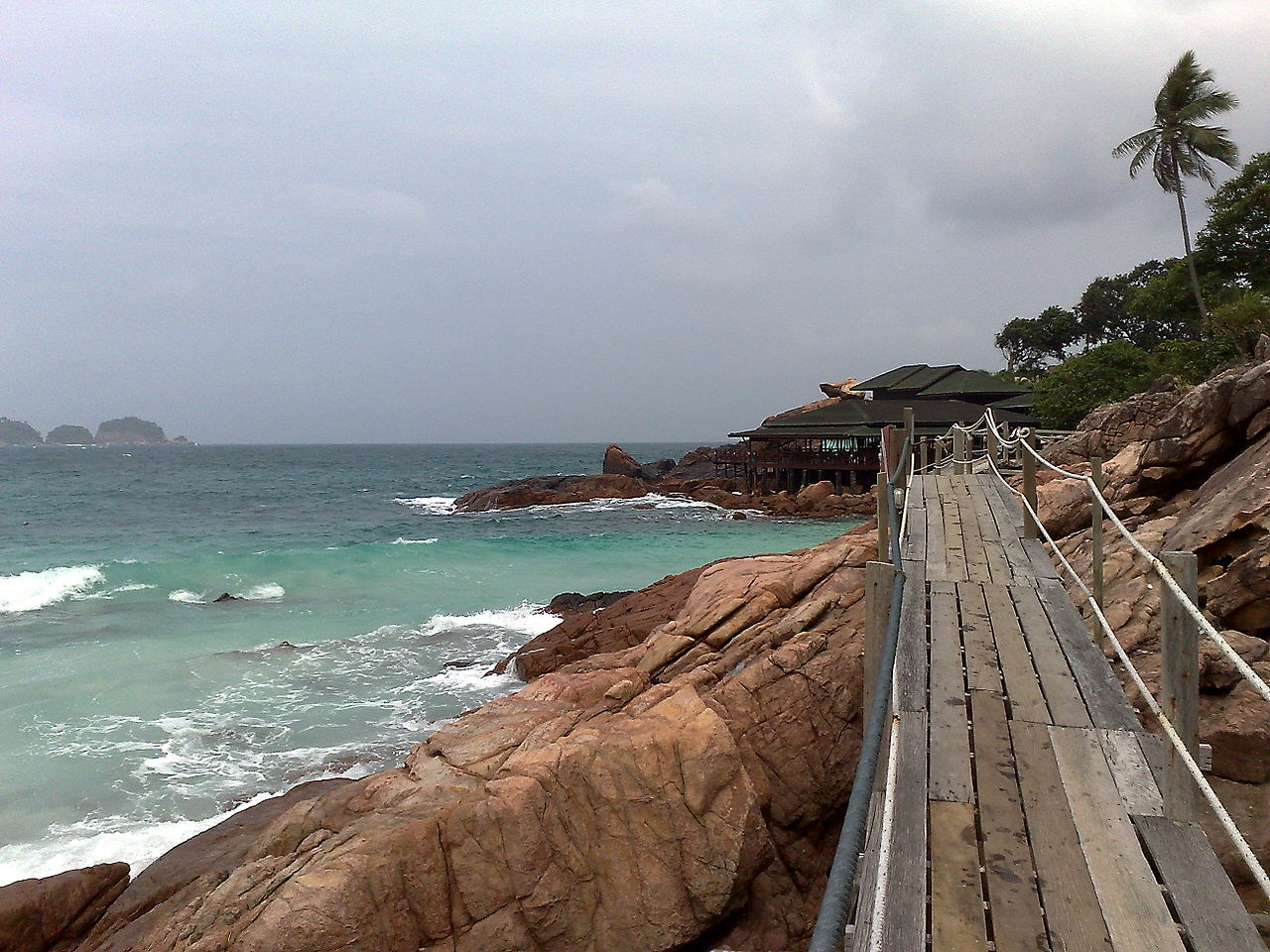
Photo: MDChaara / Wikimedia Commons, CC BY-SA 3.0
Turtles and the Chagar Hutang Sanctuary
Redang is one of Malaysia’s key green turtle nesting sites. At Chagar Hutang, a bay on the north of the island, the Sea Turtle Research Unit (SEATRU) of Universiti Malaysia Terengganu has run a turtle conservation programme for decades. SEATRU reports between 1,000 and 1,500 green turtle nests a year there, and a record 1,731 nests in 2020. Green turtles nest from around January to October, with the peak from May to July. A few hawksbill turtles nest here too.
To protect the turtles, the Terengganu state government gazetted Chagar Hutang as a turtle sanctuary in 2005, and it has been closed to the public since. Only SEATRU researchers and volunteers are allowed on the beach, so volunteering with SEATRU is the responsible way to get involved. Elsewhere, if you see a turtle on a beach at night, keep your distance and never use a torch or flash.
The best souvenir from Redang is a reef that looks the same next year.

Photo: Mukherjeesaikat / Wikimedia Commons, CC BY-SA 3.0
Where to Stay
Accommodation ranges from simple chalets to beach resorts, almost all sold as packages. Choose Pasir Panjang for the liveliest beach, or a smaller bay for quiet. For more of Terengganu’s islands, see our guide to Visit Terengganu 2027.
Good to know
Season, transport and fees are from Marine Parks of Malaysia (checked October 2026), Tourism Malaysia and published marine park fee tables; turtle figures are from SEATRU, Universiti Malaysia Terengganu. Prices change; confirm with your resort. USD at about RM4.08.
Pasir Panjang or a quiet bay? Share your favourite corner of Redang in the comments below.
Explore the magazine
THE SERUMPUN TRAVEL DESK
Make more of your journey
Planning a trip around Malaysia? Explore accommodation and compare current availability on Trip.com before you travel.
Affiliate disclosure: Serumpun Living may earn a commission from qualifying bookings through this link, at no additional cost to you. Prices and availability are determined by Trip.com.
Leave a Reply