
Photo: Misaochan / Wikimedia Commons, CC BY-SA 3.0
On Terengganu’s coast, the morning catch does not only go into the curry pot. It goes onto the grill, into banana leaves and through very skilled hands.
Drive along Terengganu’s coast road and you will smell them before you see them: wisps of charcoal smoke, the sweetness of toasting leaves, a vat of oil bubbling beside a roadside stall. Satar, otak-otak and keropok lekor are the state’s great fish snacks. All three begin with fresh fish from the coast, and all three appear on Malaysia’s national heritage food lists, where keropok, otak-otak and sata were recognised in 2009. Yet each is made, shaped and eaten quite differently.
Keropok Lekor: Terengganu’s Signature
Keropok lekor, or kepok getel as many locals call it, is a chewy fish sausage made from fish such as ikan tamban (sardine) or ikan parang (wolf herring). The flesh is minced into a paste, kneaded with sago flour and salt, rolled by hand into long sausages and boiled. It can be eaten soft and steaming straight from the pot, or sliced and fried until crisp outside, then dipped into a sweet-sour chilli sauce.
Its story is tied to Kuala Terengganu’s fishing villages. According to local accounts reported by Utusan Malaysia, Kampung Tanjung was among the first places to make it in the late 1960s, before the trade moved to Kampung Losong in the 1970s. Losong is still the address for keropok lekor, with more than 20 stalls and shops, a few of them run by the children of the village’s first sellers. Some makers still boil their keropok over firewood for its aroma. Today the snack is exported abroad, too.
Satar: Smoke and Coconut in a Cone
Satar is Terengganu’s grilled fish parcel. Fish is pounded with grated coconut, shallots, chilli and spices, spooned into banana leaf folded into a neat triangle or cone, pinned onto bamboo skewers and grilled over charcoal until the leaf chars and the filling sets. The result is smoky, slightly sweet and rich with coconut. Satar is especially associated with Kemaman, where it is sold by the stick from roadside grills.

Photo: Maslight / Wikimedia Commons, CC BY-SA 4.0
In Kemaman, Warung Aziz Satar at Kampung Geliga, on the road to Kuala Kemaman, is one of the best-known names. The family business has made satar and keropok lekor for around three decades and, as the family told Kosmo in October 2025, has seven branches around the district. Our Kemaman food trail has more of the district’s favourites.
Otak-Otak: The East Coast Way
Most Malaysians know otak-otak as the spicy orange fish cake of Muar in Johor, grilled in coconut leaf. On the east coast, the style is different. Terengganu otak-otak is typically paler, a seasoned fish paste with coconut milk, wrapped in thin strips of coconut or nipah palm leaf and grilled until lightly charred. To eat it, you simply peel open the leaf.
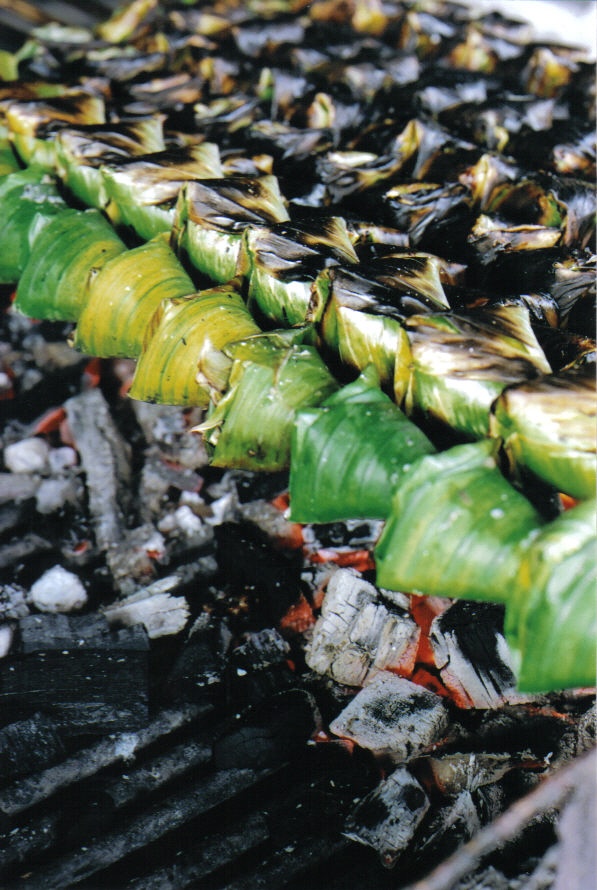
Photo: Alicia Lim / Wikimedia Commons, CC BY 2.0
The difference in one line
- Keropok lekor: a boiled fish-and-sago sausage, eaten soft or fried, with chilli sauce.
- Satar: fish and grated coconut grilled in a banana-leaf triangle or cone on a bamboo skewer.
- Otak-otak (east coast): a pale, coconutty fish paste grilled in thin coconut or nipah leaf strips.
- Eat them hot: all three are best within minutes of leaving the grill or the pot.
From Village Stall to Export
What began as a way for fishing families to use the day’s catch has become an industry. Utusan Malaysia reported in December 2024 that one Terengganu company had begun selling keropok lekor commercially in Brunei, Saudi Arabia, China and Japan, with plans for the United Kingdom. Larger producers now buy ready-processed fish paste, while small stalls keep the hand-kneading and hand-rolling that give the best texture.
The fish matters. Oily, flavourful species such as sardine and wolf herring give keropok lekor its savoury depth, and the ratio of fish to sago decides whether it is tender or tough. Locals judge a good one by its springy bite and a clear taste of the sea.
Where to Taste Them
For keropok lekor, Kampung Losong in Kuala Terengganu is the pilgrimage. For satar, head to the roadside grills around Geliga and the coast road north of Chukai. For all three in one evening, browse the stalls at Chukai’s night markets, where vendors often sell fish snacks alongside kuih and grilled meats.
Editor’s Note
Buy from stalls where you can see the grill working and the turnover is brisk. Fresh keropok lekor and satar do not wait long, and that is exactly how you want them. Frozen keropok lekor is widely sold in Terengganu if you want to take some home; keep it cold on the journey.
Three snacks, one coastline, and a whole culture of making the most of the sea. In Terengganu, a stick of satar and a bag of hot keropok lekor are not just something to eat on the way. They are the way.
Explore the magazine
Leave a Reply